Lake Khövsgöl Ice Festival: The Ultimate Guide to Mongolia’s Frozen Blue Pearl
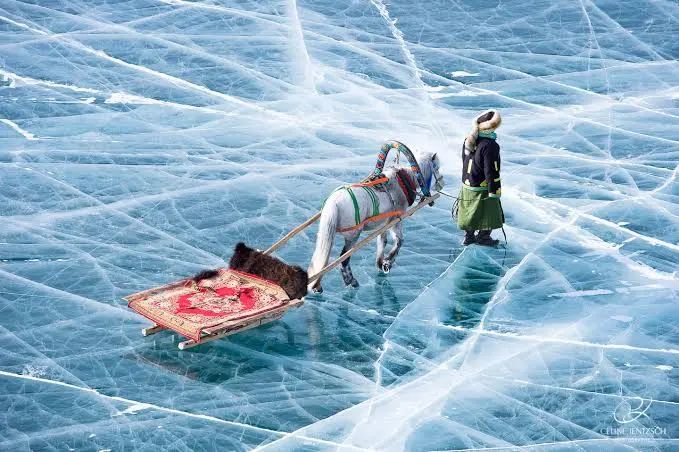
Every year in early March, something extraordinary happens on the northern frontier of Mongolia. Lake Khövsgöl revered by locals as Dalai Eej (“Mother Ocean”) and celebrated worldwide as the “Blue Pearl of Mongolia”, transforms into an ethereal expanse of crystal-clear ice over two meters thick.
While summer visitors come to sail its turquoise waters, winter unlocks a completely different world: the annual Lake Khövsgöl Ice Festival (also known as the Blue Pearl Ice Festival). For two days, local nomadic families, Darkhad shamans, horse wranglers, and adventurous travelers gather on the frozen surface just outside the village of Khatgal to celebrate the turning of the seasons with horse-drawn sleigh races, ice sculpting, and traditional Mongolian games.
If you are looking for an off-the-beaten-path winter journey combining raw Siberian landscapes with authentic nomadic culture, here is everything you need to know about experiencing Mongolia’s frozen Blue Pearl.
What Is the Lake Khövsgöl Ice Festival?
Established in 2000 by local environmental rangers and residents, the Ice Festival was created to promote winter tourism and raise awareness for the preservation of Lake Khövsgöl. Holding roughly 70% of Mongolia’s freshwater and over 1% of the world’s accessible surface freshwater, the lake is both ecologically critical and spiritually sacred.
Over the past two decades, the gathering has grown into Northern Mongolia’s premier winter event. Unlike commercialized tourist spectacles, the festival remains a community celebration. Herders travel across Khövsgöl province dressed in their finest winter deels (silk-trimmed, sheepskin-lined traditional coats), fur hats, and leather riding boots, gathering with family and friends after months of harsh, isolated winter living.
When and Where Does the Festival Take Place?
Festival Dates
The festival is held annually in early March (typically across the first weekend of the month). Early March is the ideal window: the ice sheet has reached its maximum thickness and stability, while daytime temperatures begin to moderate under bright, cloudless sunshine.
Location & Getting There
The event takes place directly on the ice off the southern shore of the lake near the settlement of Khatgal, about 100 kilometers north of the provincial capital of Murun.
Reaching the festival typically involves:
- A 1.5-hour domestic flight from Ulaanbaatar to Murun.
- A scenic 1.5-hour drive across snow-covered steppe and Siberian larch hills to Khatgal via heated 4×4 vehicles.
The Ice of Lake Khövsgöl: What Makes It Unique?
Because Lake Khövsgöl’s water is exceptionally pure and untouched by agricultural runoff, the ice freezes with remarkable clarity.
- The Glass-Floor Phenomenon: Walking across the lake feels like stepping onto polished glass. Looking down reveals dark sapphire depths, frozen air bubbles trapped like suspended pearls, and white geometric stress fractures extending deep into the sheet.
- The Living Ice: As daytime sun warms the surface and nighttime frosts plunge temperatures, the ice expands and contracts. This produces resonant, laser-like acoustic “booms” that reverberate across the vast horizon. While startling to newcomers, the ice is over six feet thick, sturdy enough to safely support heavy Russian vans, horse teams, and festival crowds.
Festival Highlights: What Happens on the Ice?
1. Shamanic Fire & Offering Ceremonies
The festival opens with ceremonies led by local Darkhad and Buriat shamans. Standing on the ice around an open hearth, shamans offer milk tea, juniper smoke (arts), and blue silk scarves (khadag) to the spirits of Mother Ocean, praying for safe passage and prosperity for the coming spring.
2. Horse-Drawn Sleigh Races
Local horsemen harness shaggy Mongol horses to traditional wooden sleighs, racing along marked ice tracks. Plumes of frozen breath, flying ribbons from horse manes, and the rhythmic drumming of hooves against the ice make this a highlight for photographers.
3. Traditional Ice Sports & Games
- Ice Shagai (Ankle-Bone Shooting): Competitors slide polished sheep ankle bones across slick ice lanes toward tiny targets, accompanied by traditional chants and friendly banter.
- Ice Sumo Wrestling: Mongolian wrestlers (bökhiin) take to the slippery ice in traditional vests (zodog) and boots. Keeping your footing is as challenging as throwing your opponent.
- Tug-of-War on Ice: Teams of local herders battle on the slick surface, testing teamwork, traction, and brute strength.
4. Ice Town & Master Sculptures
Local artisans carve an entire temporary village from lake ice, including life-sized ger structures, ice slides for children, statues of regional wildlife (reindeer, argali sheep, and snow leopards), and an ice bar serving hot spiced seabuckthorn tea.
5. Natural Ice Skating and Dog Sledding
Visitors can strap on skates to glide across vast expanses of smooth black ice, or take dog-sled excursions piloted by Siberian huskies along the forested shoreline.
Essential Travel & Packing Tips
Layering for Sub-Zero Temperatures
While March brings longer daylight hours, surface temperatures on the open ice range from -10°C to -25°C (14°F to -13°F). The ice sheet acts as an active cold sink, pulling heat rapidly through your feet.
- Footwear: Sub-zero rated winter boots (rated to -30°C or -40°C) with thick felt or sheepskin insoles are essential.
- Microspikes (Ice Cleats): Highly recommended. While some areas have packed snow, large sections of the lake are polished smooth. Slip-on rubber microspikes provide stability.
- Polarized Sunglasses: Snow and ice glare at high altitudes can cause eye strain and temporary snow blindness without UV-blocking lenses.
Accommodation in Khatgal
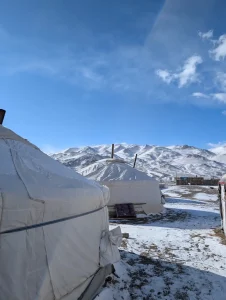
Most summer ger camps around Lake Khövsgöl are closed during the winter months. Accommodations during the festival consist of heated wooden guesthouses in Khatgal or traditional wood-stove-heated winter gers arranged by your expedition operator. Because lodging is limited, booking several months in advance is critical.
Combining the Ice Festival with the Taiga Reindeer Herders
The most rewarding way to experience the Ice Festival is as part of a wider Northern Mongolia Winter Route.
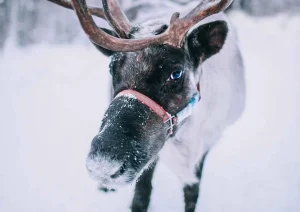
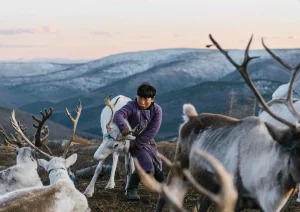
From Khatgal, travelers can journey northwest toward Tsagaan Nuur and venture into the Siberian taiga on horseback or winter sledge to live alongside the Tsaatan (Dukha) reindeer herders. Pairing the vibrant cultural energy of the Ice Festival with the quiet solitude of an authentic taiga homestay offers a comprehensive portrait of Northern Mongolia’s winter culture.
Plan Your Winter Expedition
We design private, all-inclusive winter journeys supported by experienced local drivers and bilingual guides:
- Combine the festival with our Tsaatan Reindeer Herders Homestay (10 Days).
- Explore our multi-region Ultimate Mongolia Expedition or browse our full range of Mongolia Golden Eagle Festival Tours.
- For custom March itineraries and group reservations, contact our team directly through our Website or via WhatsApp (+1 604 800 5144).