Traveling to Mongolia in Winter: The Honest Pros, Cons, and Survival Guide
When you tell friends or family that you’re planning a trip to Mongolia in December, January, or February, the reaction is almost always unanimous: “Are you insane? Isn’t it minus forty degrees?”
The short answer is: yes, it gets bitterly cold. Mongolia in deep winter is one of the most climatically extreme inhabited regions on Earth. Ulaanbaatar routinely holds the title of the coldest capital city in the world, and once you venture out onto the open steppe or into the northern taiga forest, temperatures between -25°C and -40°C (-13°F to -40°F) are a daily reality.
Yet, winter is secretly the most magical, culturally profound, and visually breathtaking season to experience Mongolia. The crowds vanish. The endless steppe is blanketed in pristine, sparkling snow under brilliant, cloudless cobalt skies. Nomadic families welcome you into toasty, stove-heated gers with steaming bowls of milk tea and open arms.
Here is an honest, no-fluff guide covering the real pros, the undeniable cons, and everything you need to know to decide if a winter expedition in Mongolia is right for you.
The Honest Pros: Why Winter in Mongolia Is Unbeatable
1. You Have the Country Entirely to Yourself
Between June and August, thousands of travelers descend upon Terelj National Park, the Gobi Desert, and Lake Khövsgöl. In winter, tourism drops to near zero. You can stand atop frozen mountain ridges or ride across snow-draped valleys without seeing a single other vehicle, tour group, or drone buzzing overhead. The sense of boundless wilderness is completely untamed.
2. Winter Nomadic Hospitality at Its Purest
In the summer, nomadic families often host back-to-back tour groups. In winter, they are living their true, ancestral lives. Nomads are renowned for their extraordinary warmth and generosity, and welcoming a winter guest into their ger is a point of genuine honor. You sit around a crackling wood or dung stove, share hot mutton stews, drink salted suutei tsai, and converse late into the night without a timetable.
3. Unbelievable Winter Landscapes and Photography
Mongolia is known as the “Land of the Eternal Blue Sky,” enjoying over 250 sunny days a year. Even in the dead of winter, the skies are crisp, clear azure blue. The contrast between bright sunlight, golden steppe grass poking through white snow, and hoarfrost-draped horses creates dreamlike photography conditions.
4. Unique Winter Festivals and Wildlife
Winter hosts events you simply cannot experience in summer:
- The frozen spectacle of the Lake Khövsgöl Ice Festival in early March.
- Tsagaan Sar (Mongolian Lunar New Year) in January/February, the country’s most significant cultural family gathering.
- The Thousand Camel Festival in the South Gobi Desert.
- Prime tracking conditions for snow leopards and wolves in the Western Altai Mountains, when animals descend to lower valleys.
The Undeniable Cons: What Makes It Tough
1. The Extreme, Unforgiving Cold
Let’s not sugarcoat it: -30°C demands absolute respect. If you don’t layer properly, exposed skin can suffer frostnip in minutes. Metal camera bodies freeze your bare fingertips, and smartphone batteries drain from 100% to 0% in under ten minutes if not kept inside internal heated pockets.
2. Sub-Zero Toilets and Rural Living Conditions
Outside of hotels in Ulaanbaatar, plumbing does not exist in rural winter. Ger camps and nomadic homestays use outdoor wooden outhouses (long-drops) over frozen ground. Taking a midnight bathroom run in a -30°C blizzard is an experience that builds character, but it requires mental fortitude.
3. Winter Travel Logistics and Road Closures
Snowdrifts and icy mountain passes can cause sudden delays. Many seasonal summer tourist ger camps close down between October and May. Visiting the countryside in winter requires heated Russian 4×4 vans (UAZ Furgon), experienced ice-drivers, and expert local operators who maintain active relationships with year-round nomadic families.
Winter Temperatures & Weather: Month by Month
- November (-10°C to -25°C): Winter begins to bite. Snow blankets the northern forests and steppe. A great month for early winter horse treks with manageable temperatures.
- December & January (-20°C to -40°C): Deep, Siberian mid-winter. The coldest window of the year. Rivers, lakes, and peat bogs are frozen rock-solid. Best for extreme adventure seekers, pristine snowscapes, and intimate homestays.
- February (-15°C to -30°C): Still bitterly cold, but daylight hours lengthen noticeably. Peak time for Tsagaan Sar celebrations and winter camel trekking.
- March (-5°C to -20°C): Late winter transition. The ice is thickest on Lake Khövsgöl for the annual Ice Festival, and daytime sun begins to feel noticeably warm on your face.
How to Survive -30°C: The Golden Rules
Master the 3-Layer System
- Base: Heavy 100% merino wool (250gsm+). Never wear cotton.
- Mid: Thick fleece, boiled wool sweater, or lightweight down jacket.
- Outer: Heavy windproof, waterproof expedition down parka (800+ fill power) and insulated snow trousers.
Protect Extremities
- Feet: Baffin or Sorel boots rated to -40°C or traditional felt-lined Mongolian leather riding boots. Wear wool socks with enough room to wiggle your toes—tight boots mean frozen feet.
- Hands: Thin merino liner gloves inside heavy shearling or down mittens.
- Head: Windproof balaclava, thermal neck gaiter, and wool hat covering your ears completely.
Trust the Ger and the Stove
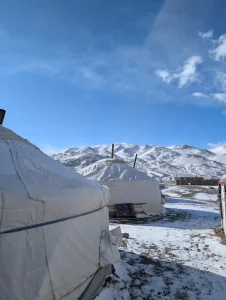
A traditional Mongolian ger insulated with thick sheep felt and heated by an iron stove (zuukh) can reach 25°C (77°F) inside while it’s -35°C outside. Learn the rhythm of adding wood or dry dung to the fire, sleep in a winter-grade -20°C sleeping bag, and you will stay completely warm all night.
Planning Your Winter Mongolia Journey
Traveling independently in rural Mongolia during winter is practically impossible unless you speak fluent Mongolian and have Arctic survival driving skills. Joining a well-organized expedition guarantees:
- Reliable heated 4×4 vehicles with emergency recovery equipment.
- Hand-selected nomadic host families with warm, well-insulated gers.
- Complete logistics including domestic flights, permits, and Arctic riding gear.
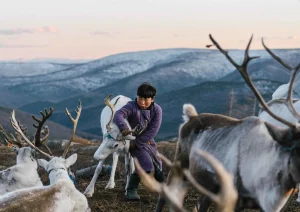
Whether you want to ride horses into the remote northern taiga to live with the reindeer herders, attend the frozen spectacles of Lake Khövsgöl, or experience the stillness of the winter steppe, winter in Mongolia will change the way you see the world.
Ready for a True Arctic Adventure?
Explore our private winter expeditions and custom journeys:
- Tsaatan Reindeer Herders Homestay (10 Days)
- Ultimate Mongolia Expedition (15 Days)
- Or reach out to our expedition team directly via our Website or WhatsApp (+1 604 800 5144) to design a bespoke winter route.