Visiting the Tsaatan Reindeer Herders in Winter: What It’s Really Like
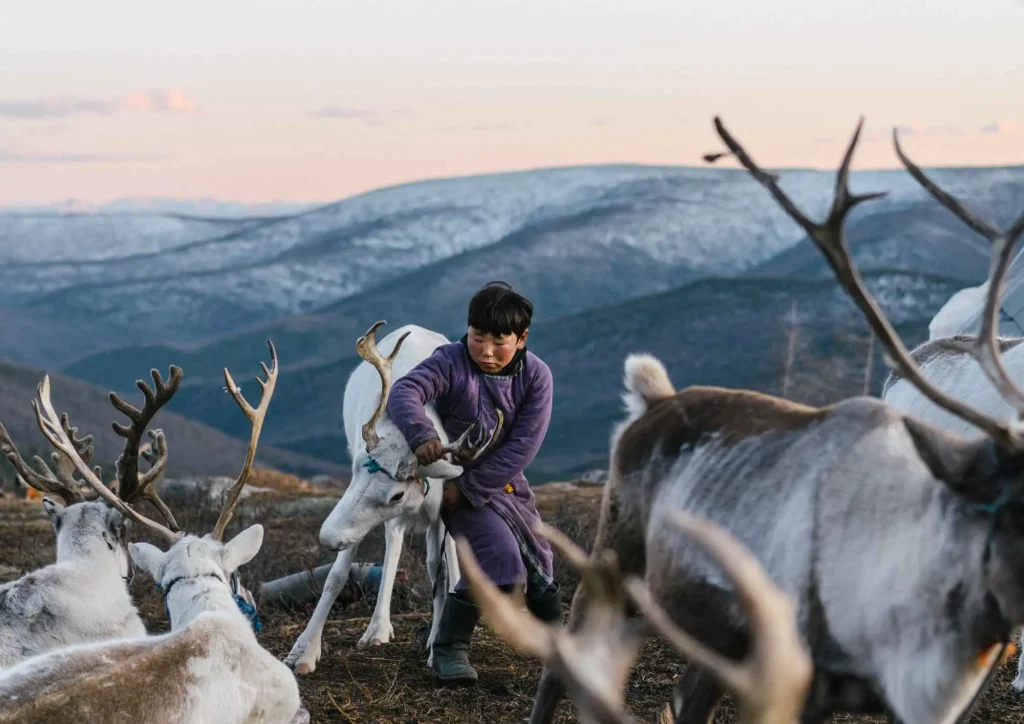
Deep in the northernmost reaches of Mongolia, where the rolling steppe surrenders to the vast Siberian sub-arctic forest, winter does not arrive gently. It descends like an iron curtain. The larch trees stand silver with hoarfrost, mountain streams freeze into turquoise ribbons of solid ice, and temperatures plunge toward -30°C (-22°F) and beyond.
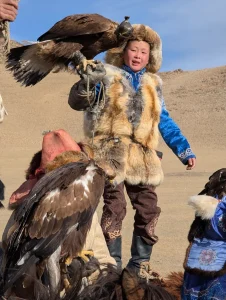
For most travelers, Mongolia is synonymous with endless summer grasslands or the autumn spectacle of the Golden Eagle Festival. But when the festival crowds vanish and the first heavy blizzards sweep across the Sayan Mountains, a rare and magical world awakens: the winter home of the Dukha, known throughout Mongolia as the Tsaatan (the “reindeer people”).
Visiting the Tsaatan reindeer herders in winter is widely considered one of the most remote, physically demanding, and spiritually transformative journeys on the planet. Here is an honest, unvarnished look at what it is really like to venture into the winter taiga, how nomadic families thrive in sub-zero extremes, and how you can experience this once-in-a-lifetime expedition.
Why Winter Is Secretly the Best Time to Visit the Taiga
While the summer months (June to August) see the highest number of visitors to Northern Mongolia, seasoned expedition travelers know that winter holds distinct advantages:
- Frozen Ground vs. Treacherous Peat Bogs: During summer, the taiga acts like a giant sponge. Horses must trudge through axle-deep peat bogs, black mud, and swarms of biting flies. In winter, the mud freezes rock solid. Snow-packed trails and frozen rivers create stable paths for horses, sleighs, and snowmobiles, turning days of bog-wrestling into crisp, scenic rides.
- Absolute Solitude: In peak summer, several tour groups may visit the East Taiga camps simultaneously. In winter, you are almost guaranteed to be the only outside traveler in the entire valley. The connection with host families is deeply personal, unhurried, and authentic.
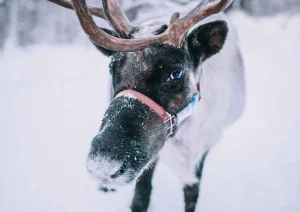
- Reindeer in Their Natural Element: Reindeer suffer in the heat of summer; they are Arctic animals built for snow. In winter, their coats are dense, their antlers magnificent, and their energy boundless. Seeing a herd grazing peacefully beneath snow-draped pines while hoarfrost glints on their muzzles is an unforgettable sight.
- Accessible Winter Camps: In deep winter, many Tsaatan families move down from the highest mountain tundra into sheltered river valleys closer to Tsagaan Nuur, making them more accessible than during the late spring migrations.
The Journey: How to Reach the Remote Siberian Borderlands
Reaching the winter taiga is an expedition in every sense of the word. Roads end hundreds of kilometers before the forest begins:
- Stage 1: Ulaanbaatar to Murun. Your journey begins with a domestic flight from the capital to Murun, the provincial hub of Khövsgöl.
- Stage 2: Across the Frozen Steppe to Tsagaan Nuur. From Murun, you travel north in rugged 4×4 vehicles or iconic Russian UAZ “Furgon” vans across snow-dusted valleys and frozen river crossings to the small settlement of Tsagaan Nuur (the White Lake basin), the gateway to the taiga.
- Stage 3: Riding into the Taiga. At the trailheads near Tsagaan Nuur, you meet your local Dukha horse wranglers. From here, you mount sure-footed Mongol horses—or in certain snow conditions, snowmobiles or winter sledges—to cross snowbound passes into the ancestral encampments of the East or West Taiga.
The journey requires stamina, resilience, and an openness to adventure. But the moment you crest the final mountain pass and spot wisps of blue woodsmoke curling from a cluster of teepees nestled in a snowy clearing, every bump in the road dissolves.
Life Inside the Ortz: Teepee Living at -30°C
One of the questions prospective travelers ask most frequently is: “How do you survive sleeping in a canvas teepee when it’s minus thirty outside?”
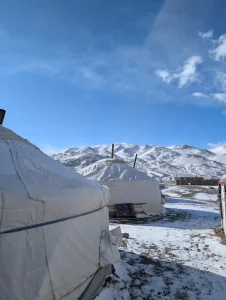
The traditional Dukha dwelling is called an ortz. Resembling the teepees of North American Plains tribes, it consists of a conical wooden framework covered in thick canvas and treated skins. At the dead center of the ortz sits the beating heart of nomadic life: the zuukh (a small, efficient wood-burning iron stove).
Here is the daily reality of ortz living:
- Blast-Furnace Warmth: Dry Siberian larch wood burns intensely hot. Within fifteen minutes of lighting the stove, the interior of the ortz warms up to t-shirt temperatures, even when a blizzard howls outside.
- The Stoking Ritual: Because iron stoves lose heat quickly once the fire dies down, wood is replenished throughout the evening. You will sleep in cold-weather expedition sleeping bags atop reindeer pelt rugs and felt mattresses, staying thoroughly insulated and warm all night long.
- Morning Woodsmoke and Tea: Mornings begin with your host stoking the morning fire. As the tea kettle whistles, you are handed a steaming bowl of suutei tsai (salted milk tea, often brewed with fresh, rich reindeer milk) and hot fried bread (boortsog).
Daily Life with the Dukha Nomads
The Dukha are among the world’s last remaining nomadic reindeer pastoralists. Only around 40 to 50 families continue to live this ancestral lifestyle, divided between the East and West Taiga.
Morning Chores and Reindeer Tending
Each morning brings the rhythm of the herd. You help round up reindeer grazing on moss beneath the snow, assist in corralling nursing cows, and brush thick rime frost from their coats.
Riding Reindeer Across Snowbound Passes
The Dukha are legendary for saddling and riding their reindeer across high, rugged passes. Unlike horses, reindeer have broad, split hooves that spread under weight, functioning as natural snowshoes that allow them to walk over deep powder drifts without sinking.
Firewood, Water, and Forest Living
Life in the taiga strips away modern distractions. Splitting dry larch logs, chipping river ice to melt for drinking water, and gathering around hearty communal meals of stewed mutton, noodles, and wild herbs shape each day.
Shamanic Worldview and Evening Hearth Stories
The Dukha live in intimate spiritual communion with the taiga. Practicing ancient shamanism, they view the mountains, rivers, and trees as living protectors. Evenings around the stove are filled with oral histories, local legends, and the haunting, twanging melodies of the tumur khuur (jaw harp).
Essential Packing Guide: How to Layer for Sub-Zero Mongolia
Surviving and enjoying winter in Northern Mongolia comes down entirely to preparation and the three-layer rule:
- Base Layer: Heavyweight 100% merino wool thermal tops and bottoms. Avoid cotton entirely, as moisture against the skin freezes rapidly.
- Mid Layer: High-loft fleece, boiled wool sweaters, and down knits that trap body heat without restricting movement.
- Outer Layer: Windproof, waterproof expedition down parka (rated to -30°C or -40°C) and heavy insulated snow trousers.
- Extremities (Crucial!):
- Footwear: Sub-zero rated winter boots (such as Baffin or Sorel rated to -40°C) or traditional felt-lined Mongolian riding boots.
- Hands: Thin merino liner gloves inside thick sheepskin or down mittens (mittens keep fingers far warmer than gloves).
- Head & Neck: Windproof balaclava, wool beanie, and neck gaiter.
- Electronics Care: Lithium-ion camera and smartphone batteries drain within minutes in sub-zero cold. Always carry spare batteries in internal chest pockets close to your body warmth, and bring a heavy-duty portable power bank.
Tip: When you travel on an organized expedition with Mongolia Golden Eagle Festival Tours, premium traditional wool-lined outerwear (deels) and cold-weather riding gear can be arranged so you don’t need to purchase thousands of dollars of specialized Arctic apparel for a single trip.
Responsible & Ethical Travel in the Taiga
Because the Dukha community is small and vulnerable, responsible tourism is not an option—it is an obligation.
- Direct Economic Support: Ensure your trip is organized with a tour operator that works directly with local Dukha elders and wranglers, guaranteeing fair wages for host families, horse handlers, and community funds.
- Heirloom & Hearth Etiquette: The central stove is sacred; never toss trash, orange peels, or wrappers into the fire. In the ortz, never point the soles of your feet toward the back altar where family sacred items are kept.
- Reindeer Welfare: Reindeer are revered members of the family, not carnival rides. Never chase, pull, or force an animal to carry weight beyond its capacity.
How to Book Your Winter Taiga Expedition
If you are ready to experience one of the few truly untouched nomadic cultures left on Earth, winter in the taiga delivers an adventure unlike anything else.
Our Tsaatan Reindeer Herders Homestay is an all-inclusive 10-day expedition designed for travelers seeking genuine immersion, safety, and logistical precision. We provide:
- Private flights and rugged heated 4×4 transport
- Experienced bilingual Mongolian and Dukha expedition guides
- Full safety protocols, emergency satellite communications, and sub-zero gear support
- Direct cultural partnerships supporting local nomadic host families
- Flexible bespoke add-ons, including the Lake Khövsgöl Ice Festival and custom winter photography routes
Ready to Start Planning?
Explore our full Tsaatan Reindeer Herders Homestay Itinerary or get in touch with our team via our Contact Page or instant WhatsApp message (+1 604 800 5144) to reserve your private winter expedition dates.