Staying in a Ger (Yurt): What to Expect
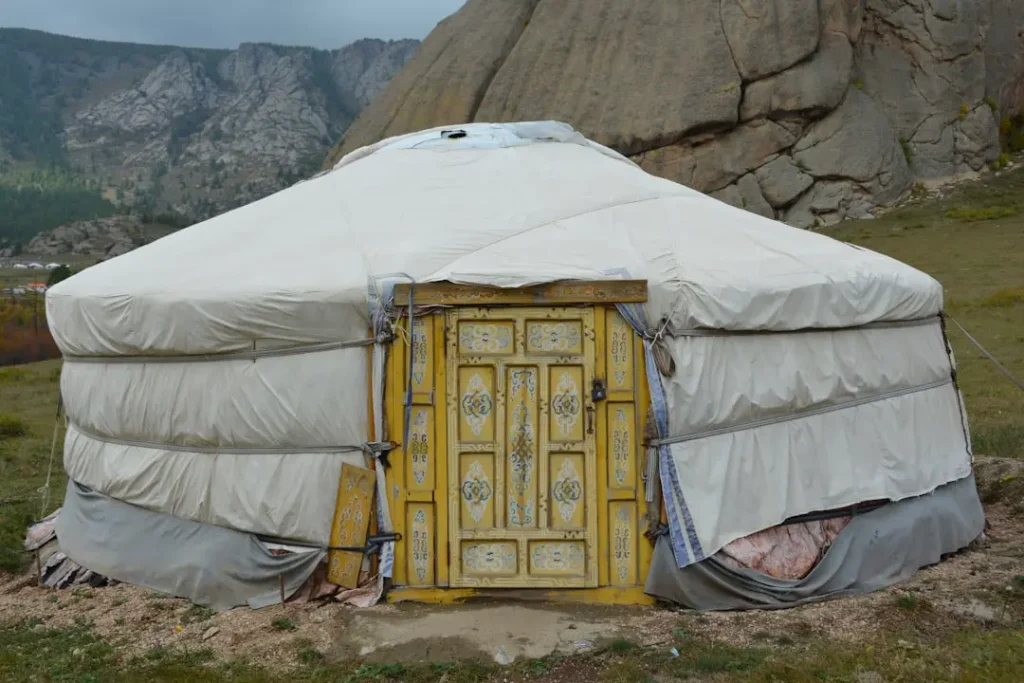
Sleeping in a ger — the circular, lattice-walled felt tent that has housed Mongolian nomads for over a thousand years — is one of the defining experiences of any Mongolia trip. Waking to the sound of wind on felt, stepping outside to a landscape of steppe or mountain stretching to every horizon, and falling asleep under a sky blazing with stars: it is genuinely unforgettable. Here is what to expect.
What Is a Ger?
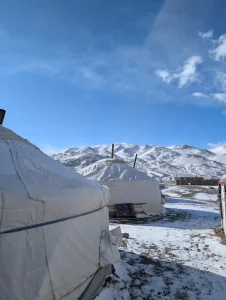
A ger (the Mongolian word; “yurt” is the Turkish/Russian term widely used in the West) is a portable circular dwelling constructed from a collapsible wooden lattice frame covered with layers of felt and canvas. At the centre sits the hearth — traditionally wood or dung-fuelled, now often a modern iron stove — and above it a circular opening (toono) that serves as both skylight and chimney. The entire structure can be assembled or dismantled in under two hours.
Modern ger camp accommodation ranges from extremely basic to surprisingly comfortable, but all retain the essential character of traditional nomadic housing.
Types of Ger Accommodation
Tourist ger camps are the most common option for organised travellers. These are permanent or semi-permanent setups with multiple ger units, shared or en-suite toilet facilities, and a central dining ger. Quality varies significantly:
Budget camps offer basic wooden-framed beds with blankets and pillows, shared outdoor or semi-outdoor toilet facilities, and cold-water washing. They are clean and functional.
Mid-range camps add proper beds with good mattresses and linen, improved shared bathrooms (sometimes with hot showers), and a well-equipped dining space. These represent the majority of ger camp accommodation on standard tours.
Semi-luxury camps — still rare but growing — offer en-suite bathrooms, under-floor heating, high-quality bedding, and even WiFi. These genuinely surprise travellers expecting a rougher experience.
Homestay gers with nomadic families are a different experience entirely: you’re a genuine guest in someone’s home. Facilities will be simple, you’ll share the space with the family, and the intimacy of the experience is its extraordinary value.
The Sleeping Setup
Standard tourist ger units accommodate two to four people on single beds, occasionally a double. Beds are typically positioned along the inner walls. A small table and stools or chairs are usually provided. At quality camps, beds are comfortable; at basic camps, a sleeping mat from home wouldn’t go amiss.
The stove in your ger will usually be lit by camp staff at night. On cool evenings (and Mongolia can be cold even in summer — the Altai in October will see temperatures near freezing after dark), the stove is everything. Learn how to add fuel if necessary, or ask your guide to show you.
Bathroom Facilities
This is usually the main concern for first-time visitors, and rightly managed expectations help enormously.
At most mid-range tourist camps, shared bathrooms with flush toilets and hot (or warm) showers are available — typically in a separate structure a short walk from the ger units. At basic camps, pit latrines are standard; they’re clean and functional but not glamorous.
Bring a head torch for night-time bathroom trips. Ger camp paths are not always lit, and the distances between ger and facilities can feel further at 3am.
Electricity and Charging
Many ger camps now have solar panels or generators that provide power for a few hours each evening. USB charging points may be available in the dining ger. Don’t rely on in-room charging — bring a portable power bank.
Temperature and Warmth
Mongolia’s climate is extreme. Summer days can be very warm (30°C+), but nights cool sharply, and in the mountains temperatures can drop to near freezing even in August. In October, night-time temperatures in western Mongolia regularly fall below 0°C.
Gers retain heat well once warmed but lose it quickly when the fire dies. Sleep with your warmest layers accessible. A good quality sleeping bag liner makes a significant difference to comfort.
Ger Etiquette
If you’re staying at a family homestay, the cultural etiquette matters (see our full guide to cultural etiquette). Key points: enter clockwise, don’t step on the threshold, move to the guest side (east/left), and accept food and drink with the right hand.
The Experience
None of the practical considerations — the pit latrines, the cold nights, the 4am stove-tending — diminish what is genuinely a profound experience. Lying in a ger as wind moves the felt walls, listening to the silence of the steppe, and understanding viscerally that this is how humans lived here for centuries: it connects you to Mongolia in a way that no hotel room ever could.
Sleep in a ger. It’s the point.