Cultural Etiquette in Mongolia: Essential Do’s and Don’ts
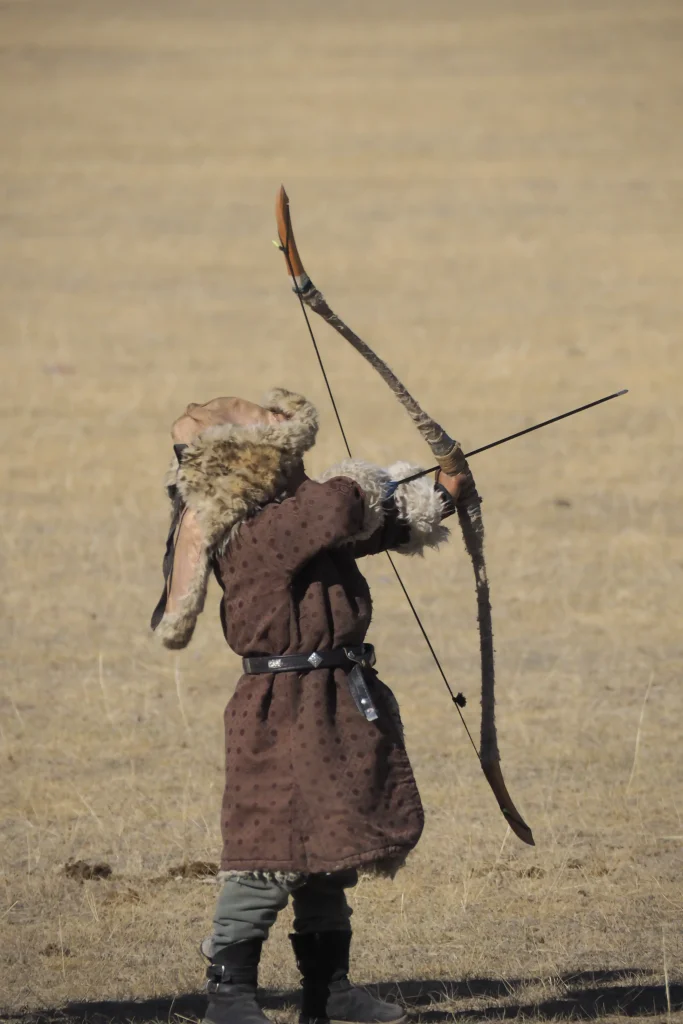
Mongolia has a rich and distinctive cultural heritage shaped by centuries of nomadic life, Buddhist traditions, and a profound relationship with the natural world. Travellers who take the time to understand and respect Mongolian customs will find doors opened — quite literally — that remain closed to those who don’t. Here’s your essential guide to cultural etiquette in Mongolia.
Entering a Ger
The ger (yurt) is the Mongolian home, and entering one comes with clear protocols that every visitor should know.
Walk clockwise once inside — this mirrors the movement of the sun and is considered auspicious. Move to the left (east) side of the ger, which is the guest area. The right (west) side is for the family.
Don’t step on the threshold. The doorstep of a ger is considered sacred. Step over it, never on it.
Sit when invited to, don’t stand around. Accept any food or drink offered, or politely decline if necessary — but always accept with your right hand or both hands, never the left alone.
Don’t lean against the support poles inside the ger. These structural columns hold up the roof and have spiritual significance.
Don’t walk between the hearth and the altar at the back of the ger. The altar (usually adorned with Buddhist icons and family photographs) and the hearth are both sacred spaces.
Food and Drink Customs
Hospitality is a foundational value in Mongolian culture. When visiting a nomadic family, you will almost certainly be offered food and drink — and refusing entirely can cause offence.
Accept airag (fermented mare’s milk) even if just for a sip. Use your right hand or both hands to receive a bowl. If you don’t want to drink, at least touch the bowl to your lips before returning it.
Don’t leave food on your plate if you can help it. Wasting food is disrespectful in a culture where resources are precious.
Receive everything with the right hand — food, gifts, money, business cards. The left hand is considered unclean in many Central Asian traditions.
Respecting Sacred Sites
Buddhist monasteries (khiid) and shamanic ovoo shrines are important spiritual sites that demand respectful behaviour.
At ovoo shrines (stone cairns found on hilltops and mountain passes), walk clockwise three times and add a stone or small offering if you pass one. Don’t remove stones.
At monasteries, dress modestly (shoulders and knees covered), remove hats before entering temple buildings, and follow any signs or guidance from monks. Photography may be restricted in inner sanctuaries — always ask.
Photography and Portraits
Mongolians are generally friendly and curious about foreign visitors, but photography etiquette matters.
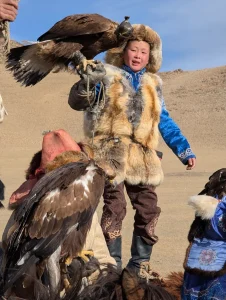
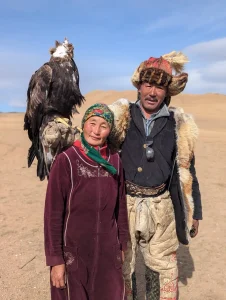
Always ask before photographing people, particularly in rural communities and especially eagle hunters in traditional dress. Many will be happy to have their photo taken, sometimes in exchange for a small tip — that’s entirely fair. Never photograph Buddhist lamas without explicit permission.
Don’t photograph military installations, police, or official buildings.
Greetings
The traditional Mongolian greeting involves a handshake while supporting your right arm with your left hand — a gesture of respect indicating that your handshake requires both hands to convey its sincerity.
Among the Kazakh communities of western Mongolia, greetings between men often involve more prolonged hand-holding and a query about the health of family, livestock, and home. Don’t rush the greeting — it has meaning.
General Respect
Don’t whistle inside a ger — it’s considered to invite evil spirits.
Don’t pour milk on the ground — dairy products are sacred in nomadic culture.
Avoid pointing with a single finger at people or sacred objects; use an open hand instead.
Dress modestly when visiting rural communities and religious sites. Mongolia can be hot in summer but revealing clothing is culturally inappropriate outside tourist areas.
Don’t put out fires with water — fire is sacred in traditional Mongolian belief. If a fire needs to be extinguished, cover it with earth.
Learning a Few Words
Even a handful of Mongolian words go an enormous distance. Sain baina uu (hello), bayarlalaa (thank you), and za (yes/okay) are all that’s needed to light up faces and generate genuine warmth. Mongolians are enormously proud of their language and culture — showing even minimal effort with local language signals profound respect.
Mongolia’s cultural protocols might seem complex at first, but they stem from a coherent worldview centred on hospitality, respect for nature, and spiritual connection. Travel with attention and generosity, and you’ll be welcomed with both.