The Golden Eagle Festival in Bayan-Ulgii, Mongolia, is a sensory overload. It’s a place where ancient tradition meets the raw, jagged edges of the Altai Mountains. For a photographer, it is both a dream and a daunting technical challenge. You are dealing with fast-moving subjects (eagles and horses), unpredictable weather, intense high-altitude glare, and a crowd of other photographers all vying for the same “hero shot.”
If you’re an amateur heading to the festival for the first time, this guide will help you prepare your kit, manage your settings, and navigate the social landscape of the festival grounds to ensure you come home with a portfolio you’re proud of.
1. The Gear: What’s in Your Bag?
Western Mongolia is not the place to “travel light” if photography is your priority, but you also don’t want to be weighed down by gear you won’t use.
The Two-Body Solution
If possible, carry two camera bodies.
- Body A: Equipped with your long telephoto lens for the eagles and horse games.
- Body B: Equipped with a wide-angle or mid-range prime for environmental portraits and the opening parade.
- Why? The dust in the Altai is legendary. Swapping lenses in the middle of a windy festival ground is an invitation for sensor spots that will ruin your photos.
Lenses: Reach vs. Context
- The Telephoto (100-400mm or 150-600mm): This is your bread and butter. The competition arena is large, and the eagles often fly from a ridge high above the valley. You need the reach to capture the bird’s expression and the hunter’s face as the eagle lands on his arm.
- The All-Rounder (24-70mm or 35mm Prime): Use this for the morning preparations. The intimacy of a hunter adjusting his horse’s bridle or a family sharing tea inside a ger is often more powerful than the action shots.
- The Wide Angle (16-35mm): Great for the “big picture”—capturing the scale of the Altai mountains with thousands of spectators dotted along the ridges.
Essential Accessories
- Extra Batteries: Cold weather drains batteries at twice the normal rate. Keep your spares in an inside pocket close to your body heat.
- Memory Cards: You will be shooting in high-speed burst mode. Bring more storage than you think you need, and ensure they are high-speed cards (UHS-II) to avoid “buffering” during a crucial flight.
- Lens Cleaning Kit: Bring a blower and several microfibre cloths. You will be wiping dust and condensation off your glass constantly.
- Circular Polarizer: Vital for cutting the glare from the snow (if it falls) or the harsh mid-day sun.
2. Technical Settings: Freezing the Action
The Golden Eagle Festival moves fast. Here is how to set up your camera to ensure you don’t miss the moment.
Shutter Speed is King
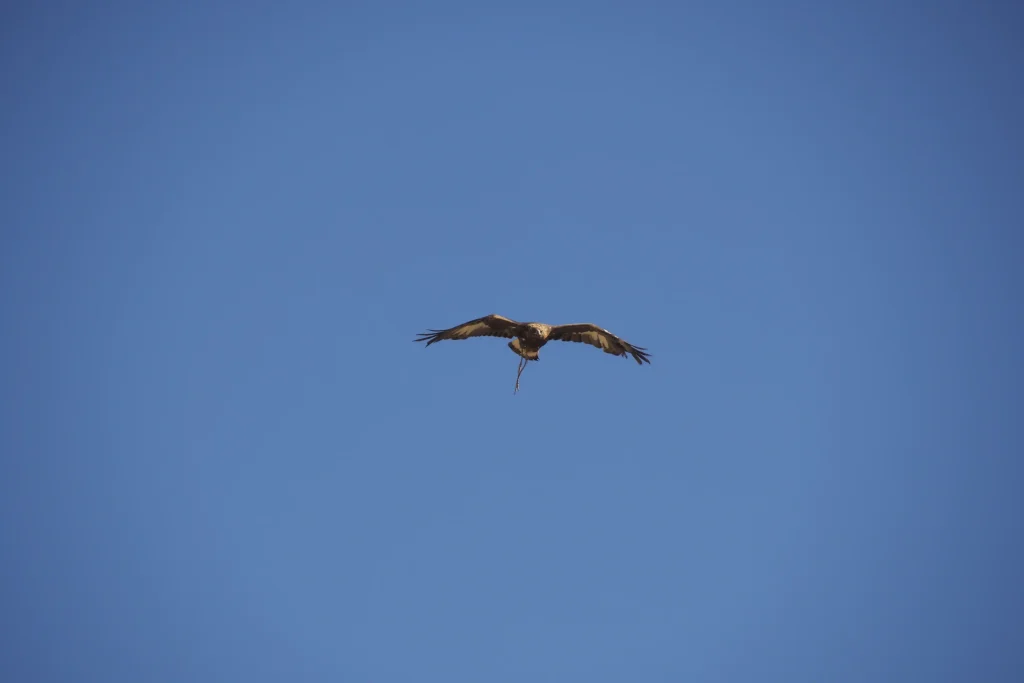
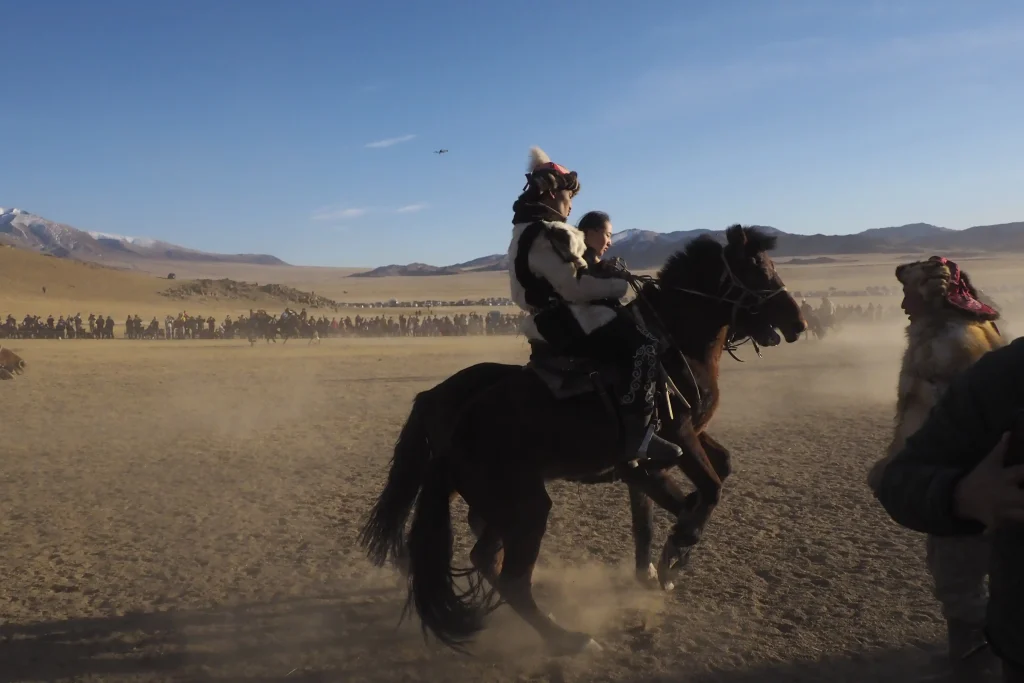
To freeze a Golden Eagle in mid-flight, you need a minimum shutter speed of 1/2000s. If the sun is bright, push it to 1/3200s. For the horse games like Kukbar, where horses are galloping and dirt is flying, 1/1000s is usually sufficient to capture the grit and motion.
Focus Modes
- Continuous Autofocus (AF-C or AI Servo): Do not use single-shot focus. You need the camera to track the bird as it moves toward the hunter.
- Animal Eye-AF: If your camera has this feature, turn it on! Modern mirrorless systems are surprisingly good at tracking an eagle’s eye, even against a busy mountain background.
- Focus Area: Use a “Zone” or “Expand Spot” focus area. A single point is too difficult to keep on a flying bird, while “Wide/Auto” might accidentally lock onto the crowd in the background.
Dealing with the Glare
The Altai sun is punishing.
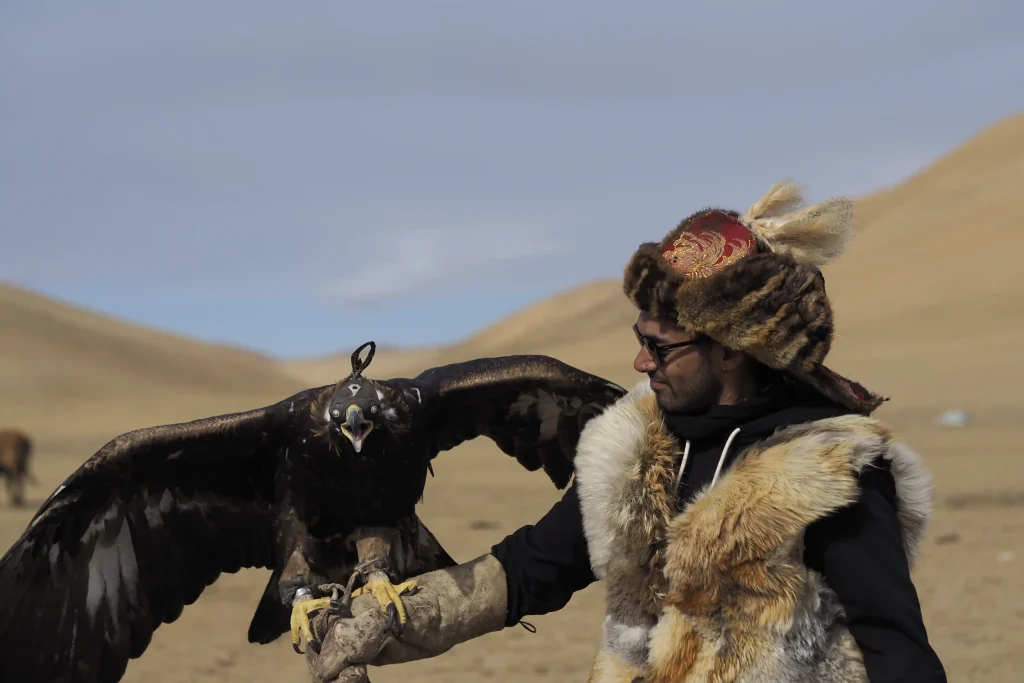
- Exposure Compensation: Because the sky is often bright and the mountains are dark, your camera might underexpose the hunter (who is often wearing dark furs). Be prepared to dial in +0.3 or +0.7 exposure compensation to keep the detail in the shadows.
- Check Your Histograms: Don’t trust the screen on the back of your camera; the sun will make it look darker or brighter than it actually is. Check the histogram to ensure you aren’t “clipping” your highlights.
3. The Timeline: Timing Your Shots
The Opening Parade (Day 1, Morning)
This is the most iconic part of the festival. Hundreds of hunters ride into the arena in single file.
- Positioning: Arrive at least 45 minutes early. Position yourself with the sun at your back. Look for the “curve” in the parade line to get shots of multiple hunters in the frame.
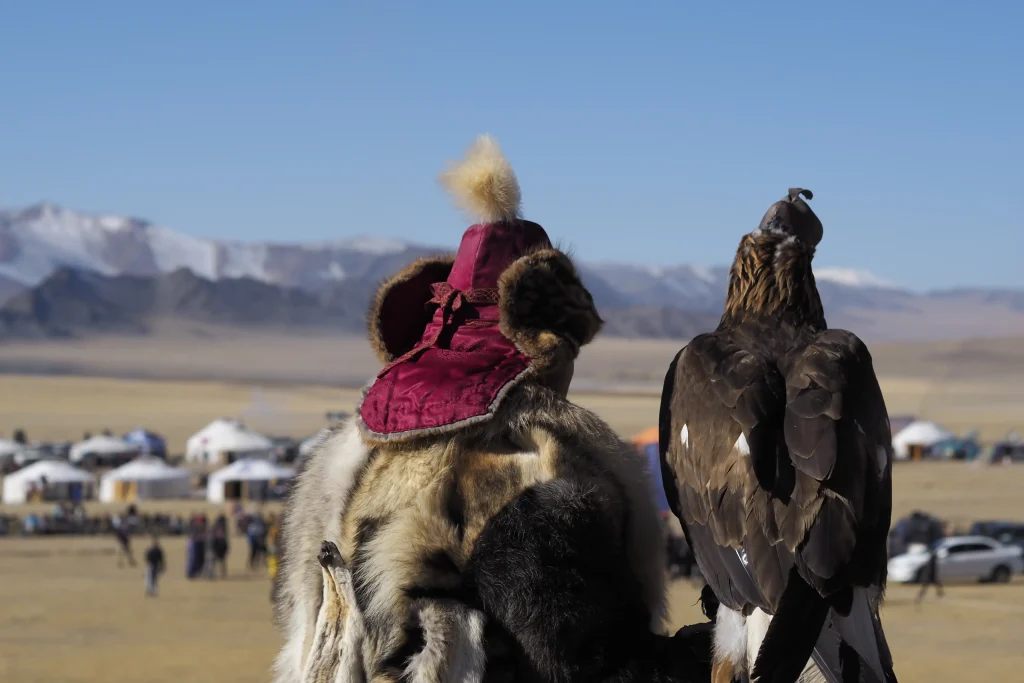
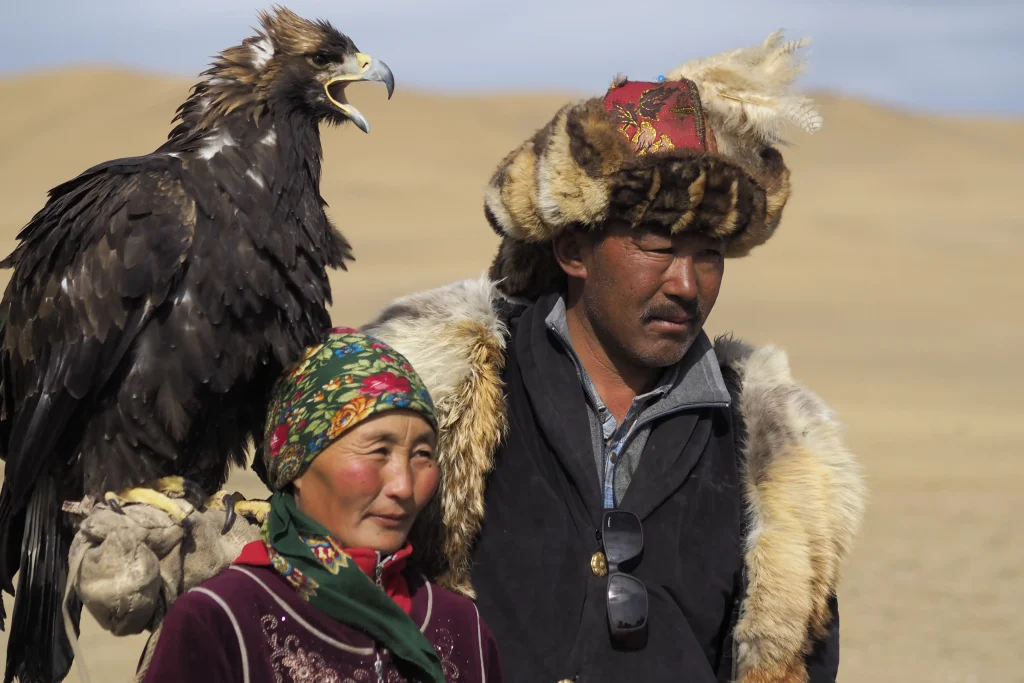
- The Shot: Focus on the textures—the embroidery on the Kazakh coats, the leather hoods of the eagles, and the breath of the horses in the cold morning air.
The Eagle Competitions
There are two main events: calling the eagle from a distance and the eagle “diving” to a lure (a fox skin dragged by a horse).
- Positioning: Most photographers huddle near the hunter. Instead, try moving further down the “flight path.” A shot of the eagle flying toward the camera is much more dramatic than a shot of its back.
- The Landing: The split second the eagle hits the hunter’s glove is the “money shot.” Use your highest burst rate (FPS) here.
The Golden Hour
The festival usually ends around 4:00 PM or 5:00 PM. This is when the light becomes magical. The dust kicked up during the day catches the low-angle sun, creating a golden haze.
- Tip: Don’t pack up early. Some of the best portraits happen after the official events end, as hunters relax and talk with their friends.
4. Navigating the “Photographer Scrums”
The festival has become very popular, and “Photographer Scrums” (groups of 50+ people all crowding one subject) are common.
How to Stay Ethical and Effective:
- Don’t be the “Lens in the Face” Person: It’s tempting to get as close as possible, but you’ll likely block someone else’s shot and annoy the hunter. Use your zoom lens and give people space.
- Look for the Quiet Moments: While everyone is sprinting toward a horse race, look behind the scenes. There is often a young boy practicing with a smaller bird or an elder sharing a joke. These candid moments often tell a better story.
- Ask Permission: If you want a dedicated portrait, a simple nod and a smile goes a long way. If they say no, respect it. If they say yes, show them the photo on the back of your camera afterward—it builds a great rapport.
5. Post-Processing: Handling the Altai Palette
When you get home and open your RAW files, you’ll likely notice three things: a blue tint from the high altitude, lots of dust spots, and flat colors from the midday sun.
- White Balance: Warm up your photos slightly. The Altai can look very “cold” digitally, but the culture is warm. Bringing the Temp slider toward the yellow side helps.
- Dehaze and Clarity: Use these sparingly to cut through the dust, but don’t overdo it, or the mountains will look “crunchy” and unnatural.
- Sensor Cleaning: You will likely spend hours using the “Spot Removal” tool to get rid of dust spots caused by the dry environment. It’s a rite of passage for Mongolia photographers!
Final Thoughts for the Amateur
You don’t need a $10,000 setup to get incredible photos at the Golden Eagle Festival. What you need is patience, preparation, and a respect for the culture. The best photo you take might not even be of an eagle; it might be the wrinkled smile of a grandmother watching her grandson compete, or the steam rising off a bowl of tea in a morning ger. Keep your eyes open, keep your batteries warm, and don’t forget to put the camera down every once in a while to actually watch the majesty of the birds.
Happy shooting!